
IN
India – FSSAI
Labelling and Display Regulations, 2020
Declaration required for cereals containing gluten, crustaceans, milk, eggs, fish, peanuts, tree nuts, soy and sulphites above 10 mg/kg.
Allergen testing
We test foods, ingredients and production lines for gluten, peanut, milk, egg, soy, tree nuts, mustard and sesame, so your allergen declarations and free-from claims are accurate and your consumers are protected.
Allergen testing laboratory
Food allergen testing is the laboratory detection and measurement of allergenic proteins, such as gluten, peanut, milk or soy, in a food, ingredient or on a surface, to support accurate allergen labelling and free-from claims.
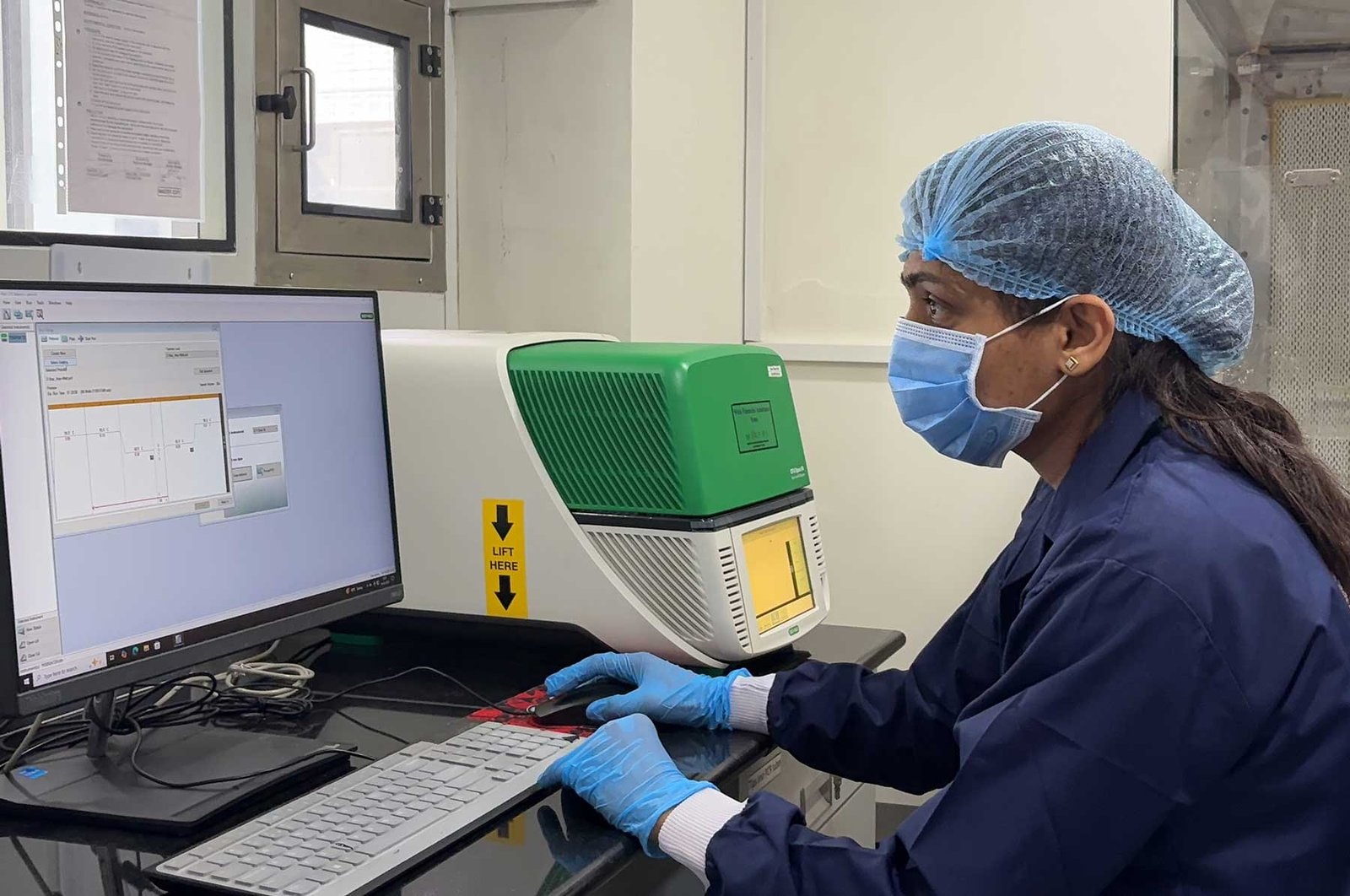
Accurate Universal Laboratories Pvt. Ltd. tests finished foods, raw materials and cleaned production lines for the major food allergens. Testing helps you confirm what your label declares, validate gluten-free and other free-from claims, and check that cleaning removes allergens between product changeovers.
This supports compliance with FSSAI labelling rules in India and with the allergen rules of export markets such as the EU, UK and USA.
Making a gluten-free or free-from claim?
Back it up with laboratory results before launch.
Importance of allergen testing
For people with food allergies, a trace of the wrong ingredient can cause a serious reaction. Undeclared allergens are also one of the most common reasons for food recalls worldwide.

Testing parameters
These are the allergens most often required by regulators and buyers. Testing can be done on products, ingredients and production surfaces.
| Test | Why it is needed |
|---|---|
| Peanut Allergen Testing | Snacks, confectionery, sauces and shared lines |
| Gluten Testing | Wheat, barley, rye and oats; key for gluten-free claims |
| Soy Allergen Testing | Processed foods, bakery and protein products |
| Milk Allergen Testing | Bakery, chocolate and dairy-free products |
| Egg Allergen Testing | Bakery, pasta, sauces and mayonnaise |
| Tree Nut Allergen Testing | Almond, cashew, hazelnut and other nuts in snacks and sweets |
| Mustard Allergen Testing | Sauces, pickles and spice blends; declared in the EU |
| Sesame Allergen Testing | Sesame seeds, oil, tahini and bakery; declared in EU, UK and US |
| Allergen Residue Detection | Traces of allergens left in products or on equipment |
| Cross-Contamination Analysis | Whether allergens transfer between products on shared lines |
Need another allergen, such as crustacean, fish or lupin? Ask us and we'll confirm availability.
Get a quote for allergen testing
Tell us the product and the allergens you need tested.
Allergen rules by market
Each market has its own list of allergens that must be declared on the label. These are the main ones.
Labelling and Display Regulations, 2020
Declaration required for cereals containing gluten, crustaceans, milk, eggs, fish, peanuts, tree nuts, soy and sulphites above 10 mg/kg.
Regulation (EU) No 1169/2011
14 allergens must be emphasised in the ingredients list, including gluten, milk, egg, peanut, nuts, soy, sesame, mustard, celery and lupin.
FALCPA and FASTER Act
Nine major allergens: milk, egg, fish, shellfish, tree nuts, peanuts, wheat, soybeans and sesame.
Codex and FSSAI
A 'gluten-free' claim generally means gluten does not exceed 20 mg/kg in the food as sold.
How it works
Tell us the product, purpose and market. We recommend the right tests and send a quotation.
Courier a sealed sample to our Ahmedabad or Rajkot laboratory, or book a sample pickup.
Samples are extracted and tested for each requested allergen with controls to confirm the method is working.
Results for each allergen, with the detection limit, ready for your label or cleaning records.
Our team explains the results and advises on next steps if a value is out of limit.
Industries we serve
Allergen control matters wherever several products share ingredients, lines or kitchens.
Sharing lines between products?
Validate your cleaning with allergen swab and rinse testing.
FAQs
It is the laboratory detection of allergenic proteins such as gluten, peanut, milk, egg or soy in a food, ingredient or on a surface, to support accurate labels, free-from claims and cleaning validation.
We test gluten, peanut, milk, egg, soy, tree nuts, mustard and sesame. Other allergens can be tested on request; contact us to confirm availability.
Gluten is measured with an immunoassay (ELISA) that detects gluten proteins. Results are compared with the 20 mg/kg level generally used for gluten-free claims.
FSSAI's Labelling and Display Regulations, 2020 require declaration of cereals containing gluten, crustaceans, milk, eggs, fish, peanuts, tree nuts, soy and sulphites above 10 mg/kg.
Yes. Swabs from cleaned surfaces and rinse water samples can be tested for the allergen used on the previous product to confirm that cleaning has worked.
The cost depends on the number of allergens and samples. Share your requirement and we will send an itemised quotation.
Yes. Our Ahmedabad laboratory is accredited by NABL to ISO/IEC 17025:2017 (certificate TC-5021) and our Rajkot laboratory under certificate TC-7988. The tests and products covered are listed in our scope of accreditation, and we confirm whether your parameters are within scope before testing.
Still have a question about allergen testing?
Talk to our team about allergens, limits or sampling.
Related services
Get a quotation
Tell us the product, the allergens on your label and the purpose of testing. We'll reply with the right tests and an itemised quotation.
Standards and regulatory references
Standards and limits change; we confirm the current requirements for your product and market at the time of testing.